
New fares effective January 10, 2027
CapMetro’s Board of Directors approved a fare increase. This is the first system-wide fare increase since 2015. Learn what your ride will cost and how you can save money on fares.
Ticket Vending Machines are being removed from bus stations and transit centers, with only one machine remaining at each Rail station. There will be a second fare increase in January 2029.
| Fare Type | Fare Cap Time Frame | Current Fare | Increased Fares | |
|---|---|---|---|---|
| January 10, 2027 Fares | January 2029 Fares | |||
| Local (Bus, Pickup, UT Shuttles) | Single Ride | $1.25 | $1.50 | $2.00 |
| Per Service Day/Calendar Month | $2.50 / $41.25 | $3.00 / $49.50 | $4.00 / $66.00 | |
| Reduced Single Ride | $0.60 | $0.75 | $1.00 | |
| Reduced Per Service Day/Calendar Month | $1.25 / $20.60 | $1.50 / $24.75 | $2 / $33.00 | |
| Commuter (Local, Rail and Express) | Single Ride | $3.50 | $4.00 | $5.00 |
| Per Service Day/Calendar Month | $7.00 / $96.25 | $8.00 / $110 | $10.00 / $137.50 | |
| Reduced Single Ride | $1.75 | $2.00 | $2.50 | |
| Reduced Service Day/Calendar Month | $3.50 / $48.10 | $4.00 / $55.00 | $5.00 / $68.75 | |
| Access | Single Ride/Monthly Pass | $1.75 / $46.50 | $2.25 / $60.00 | $3.25 / $87.00 |
Local includes Bus, UT Shuttle, and Pickup. Commuter includes all Local services, Rail and Express. Pickup trips gain fare capping on a daily and monthly basis.
Reduced Fare Program: Simplified and Explained
We’ve simplified eligibility requirements and reduced the impact of the fare increase on lower-income customers.
CapMetro’s Reduced Fare program provides a 50% discount on standard fares to qualifying riders, which include:
- Seniors (65 and older)
- Medicare card holders
- Active and reserve duty military ID holders not in uniform (military personnel in uniform ride for free)
- Riders with disabilities (see eligibility guidelines)
- Veterans
- Customers whose household income is at or below 150% of the Federal Poverty Level
No one currently enrolled loses their discount, and more riders now qualify.
Changes to Equifare
The Equifare program is being eliminated. Everyone currently enrolled in Equifare is automatically moved into the Reduced Fare program. No application is needed, and there will be no gap in benefits.
How to Apply
Riders who qualify for the Reduced Fare Program can apply online or in person at the Transit Store, 1705 Guadalupe St. Once approved, a Reduced Fare discount is good for 24 months before it needs to be renewed.
Ways to Save
When you use the Umo app or a Reloadable Fare Card, you can avoid paying more than the daily or monthly cap for your fare.
What’s the fare cap?
- Starting January 2027, the standard Local fare cap is $3.00 in a service day and $49.50 in a calendar month.
- With a Reduced Fare discount, the cap drops to $1.50 in a service day and $24.75 in a calendar month. Learn how to qualify for the Reduced Fare program at capmetro.org/RFID
- When you reach the daily cap, the rest of that service day's rides are free. A service day runs 4 a.m. to 3:59 a.m.
- When you reach the monthly cap, the rest of that calendar month's rides are free.
How to pay and enjoy fare capping:
- Tap to pay with your contactless credit/debit card or phone
- Umo app (download the app, create an account, then add money in the Wallet tab)
- Or use the CapMetro Reloadable Fare Card (pick one up at the Transit Store or H-E-B, then register the card at umopass.com)
Choose One Fare Cap Method: The Umo app and the Reloadable Fare Card each tracks its own cap, so riders should choose one payment method and stick with it to use fare capping.
Paying with Cash? Cash still works at the farebox for a single ride, but cash payments don't earn fare capping or apply a rider's Reduced Fare discount automatically.
Why Is CapMetro Increasing Fares?
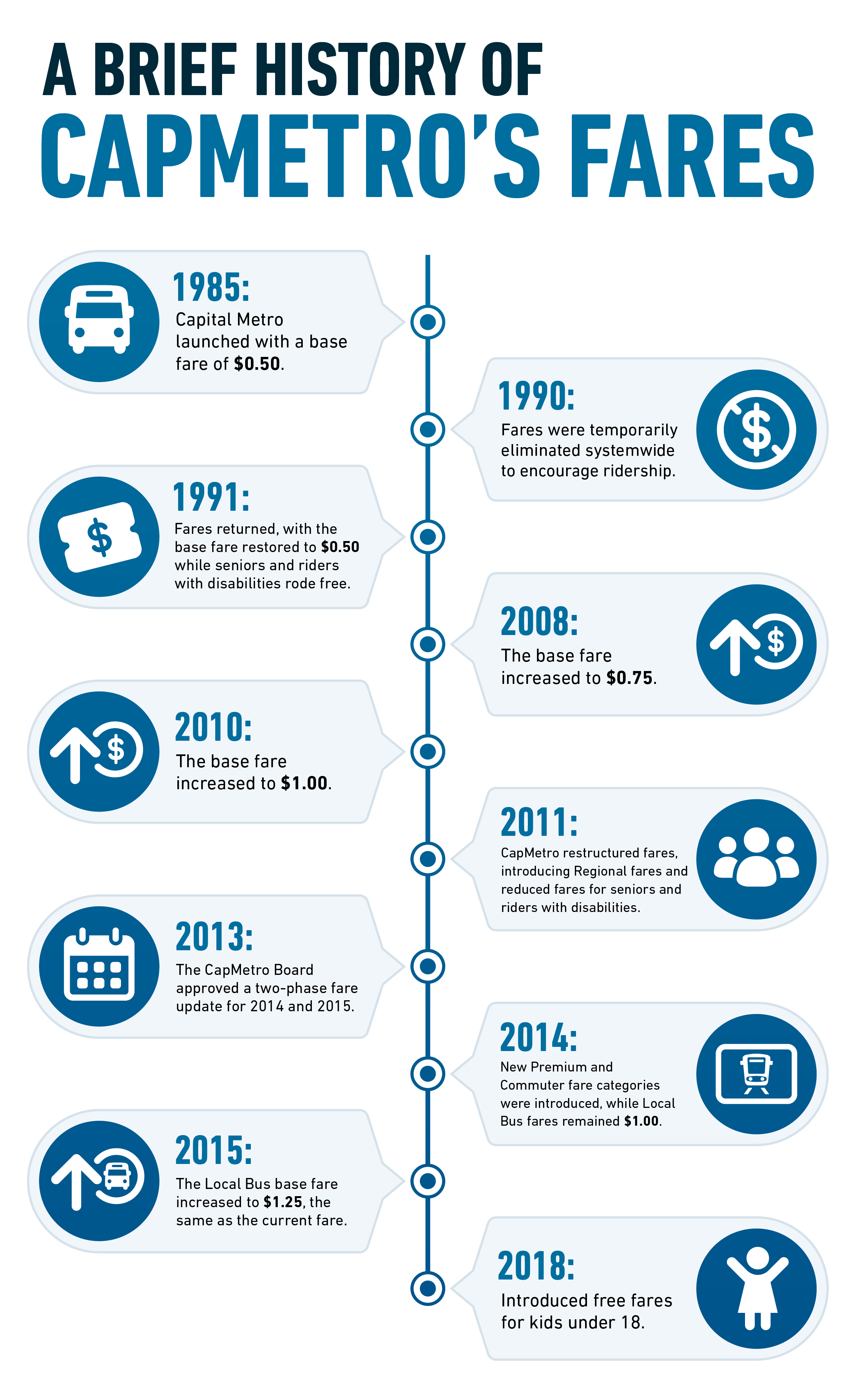
Over the past 11 years, CapMetro has expanded and improved transit service throughout Central Texas while keeping fares unchanged.
- Launching Rapid service in east Austin
- Increasing frequency on key routes
- Expanding Pickup service
- Establishing the Transit Police Department
- Modernizing fare payment technology
- Investing in new transit vehicles and infrastructure
These investments have helped improve the customer experience and provide more transportation options for the growing Central Texas region.
Since fares were last increased in 2015, inflation has significantly increased the cost of fuel, equipment, maintenance and transit operations. While CapMetro has worked to absorb many of these costs, rising expenses continue to impact the cost of providing public transportation.
The fare increase would help CapMetro:
- Maintain reliable transit service
- Support existing and future transit vehicles and infrastructure
- Address rising operating costs
- Create a more sustainable source of revenue for transit operations
Frequently Asked Questions
How does the fare cap work?
The fare cap is automatically calculated in the Umo app and Reloadable Fare Card so that you never pay more than you should. When you've paid for 2 rides in a day, you've met the cap and the rest of your rides are free until the next service day (4 a.m. to 3:59 a.m.). When you've met the daily cap 17 times in a calendar month, the rest of your rides that month are free.
Why do fares need to increase?
CapMetro hasn't raised fares since 2015. With the rising costs for fuel, maintenance and operations, adjusting our fares will help us maintain reliable service for our riders.
Why is the agency proposing a fare increase rather than decreasing other budget costs?
We've been shouldering the rising costs of operating our service for years. Fares currently cover only about 4% of what it costs to run the system, which is well below the 13 to 14% industry average. A phased fare increase is a responsible path forward.
How will you notify riders about these changes?
CapMetro’s Board of Directors approved the fare change on September 28, 2026. Between now and January 10, 2027, we’re notifying riders through printed info on vehicles and at stations, CapMetro Alerts, news media, print ads, social media and this website. Our goal is that no one is caught off guard when fares change.
Will youth, students and people with disabilities see changes to their fares?
Seniors, riders with disabilities, Medicare recipients, and eligible military personnel keep their 50% Reduced Fare discount. UT, ACC and City of Austin agreements remain in place. We're also expanding eligibility so more low-income riders and veterans can qualify.
How was the impact to low-income, minority riders considered?
We conducted a formal Title VI Fare Equity Analysis (a federal requirement for public transit agencies receiving federal funds to ensure that changes in fares or major service disruptions do not disproportionately burden minority or low-income populations). We’re gathering community input through public meetings and outreach to local organizations. Those findings were presented to the CapMetro Board, which approved both the fare change and the Reduced Fare program updates on September 28, 2026.